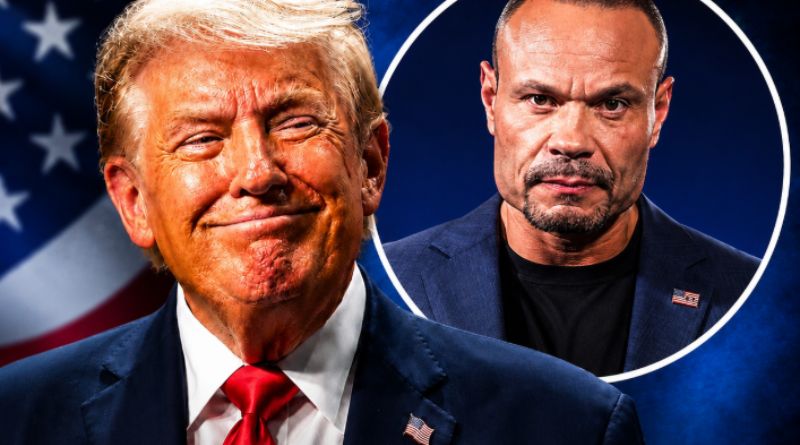
Dan Bongino’s FBI Appointment Sparks Debate Over Reform, Politics, and Institutional Independence
The political landscape in Washington, D.C., shifted dramatically when President Donald Trump appointed Dan Bongino to a senior leadership role at the Federal Bureau of Investigation, marking a departure from the longstanding tradition of selecting career FBI officials for such positions. A former New York City police officer and U.S. Secret Service agent who later became a nationally recognized media personality, Bongino brought an unconventional background to the bureau at a time of heightened political polarization and intense public scrutiny.
Before entering the media world, Bongino spent years in law enforcement, serving with the NYPD and later the Secret Service, where his responsibilities included financial crime investigations and protective assignments. He eventually gained prominence as the host of The Dan Bongino Show, becoming one of the most outspoken conservative commentators in the United States and a frequent critic of what he described as excessive bureaucracy and political bias within parts of the federal government.
His appointment quickly ignited a fierce national debate. Supporters viewed Bongino as an outsider capable of challenging entrenched institutional practices and increasing accountability within the FBI. They argued that fresh leadership could help restore public confidence and sharpen the bureau’s focus on priorities such as counterterrorism, cybersecurity, and major criminal investigations.
Critics, however, voiced concerns about the potential impact of his outspoken political views on the FBI’s long-standing reputation for independence and impartiality. Democratic lawmakers, former officials, and other observers questioned whether the appointment could blur the line between politics and federal law enforcement, warning that public trust in the institution could be affected by perceptions of partisanship.
The broader political climate further intensified scrutiny of Bongino’s tenure, with ongoing debates surrounding investigations, congressional inquiries, and decisions made during previous administrations continuing to shape public discussion. Supporters and detractors alike closely watched developments within the bureau, reflecting wider disagreements over executive authority and institutional oversight.
Various reports and public commentary have alleged that internal reviews were conducted during this period and that notable findings emerged. However, many of these claims remain unverified or are not supported by publicly available official documentation, making it difficult to assess their accuracy independently.
Although Bongino’s time in FBI leadership was relatively brief, it became a focal point in the broader national conversation about the relationship between politics and law enforcement. His tenure continues to be cited in debates over government reform, accountability, and the challenge of preserving institutional independence in an increasingly polarized political environment.