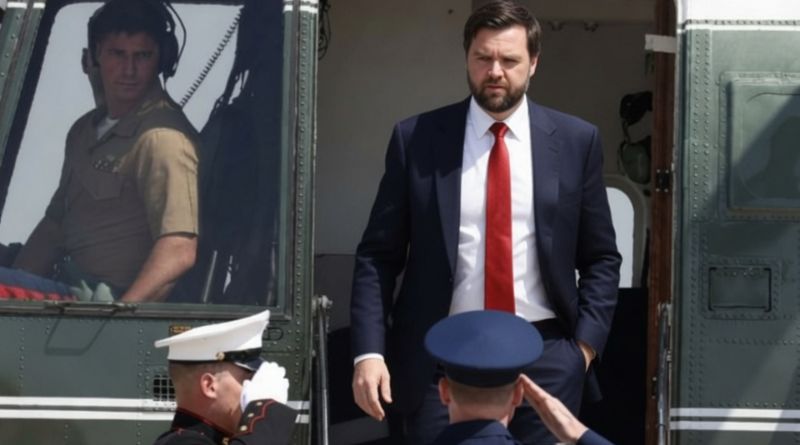
Vice President JD Vance was expected to travel to Islamabad on Tuesday to lead a U.S. negotiating team, but the trip was abruptly delayed as uncertainty grew over whether Iran would participate in the planned talks. Instead of departing for Pakistan, Vance was called back to the White House for policy meetings, according to CNN’s Alayna Treene. Sources indicated the trip has been postponed, though it remains unclear whether it will ultimately take place.
“We don’t know if this trip is definitely off,” Treene reported. “All we do know is that it is definitely delayed and that we should expect to see now the vice president at the White House for meetings today, not leaving this morning on that plane as we had previously reported.”
The planned talks come after an earlier round of negotiations involving Vance, special envoy Steve Witkoff, and senior adviser Jared Kushner failed to produce an agreement. Vance said at the time that Iranian officials would not provide the “affirmative commitment” Washington was seeking that Tehran would not pursue nuclear weapons.
“The bad news is that we have not reached an agreement,” Vance said. “And I think that’s bad news for Iran, much more than it’s bad news for the United States of America.”
Tensions remain high as diplomatic efforts continue. U.S. Central Command said Tuesday that American forces had instructed 28 ships to turn around or return to port amid ongoing restrictions tied to Iran. A U.S. official declined to say whether any vessels had entered Iranian ports but stated that ships departing Iran would be unable to pass through the Gulf of Oman under current enforcement measures.
With the two-week ceasefire involving the United States, Israel, and Iran nearing its expiration, uncertainty persists over whether Iranian representatives will attend the Islamabad talks. Pakistani Information Minister Attaullah Tarar said a formal response from Tehran had not yet been received but emphasized that communication between mediators and Iranian officials remained active.
“Pakistan is in constant touch with the Iranian side,” Tarar said, describing the proposed talks as critical.
Adding to doubts about the negotiations, Iranian President Masoud Pezeshkian criticized the initiative in a post on X, suggesting that those pressing Iran to attend the talks lacked an understanding of the situation.
Meanwhile, U.S. Chargé d’Affaires Natalie Baker met Tuesday with Pakistani Deputy Prime Minister Ishaq Dar to discuss efforts aimed at reducing tensions. According to Pakistan’s Foreign Ministry, Dar reiterated his country’s long-standing position that dialogue and diplomacy offer the best path toward lasting regional peace and stability. He also urged Washington and Tehran to continue engaging and consider extending the ceasefire to allow negotiations more time.
President Trump, however, signaled little interest in prolonging the temporary truce.
“I don’t want to do that. We don’t have that much time,” Trump told CNBC when asked about extending the ceasefire. “Iran can get themselves on a very good footing if they make a deal. They can make themselves into a strong nation again, a wonderful nation again.”
As the ceasefire deadline approaches, the future of the Islamabad talks—and broader efforts to secure a lasting agreement—remains uncertain.