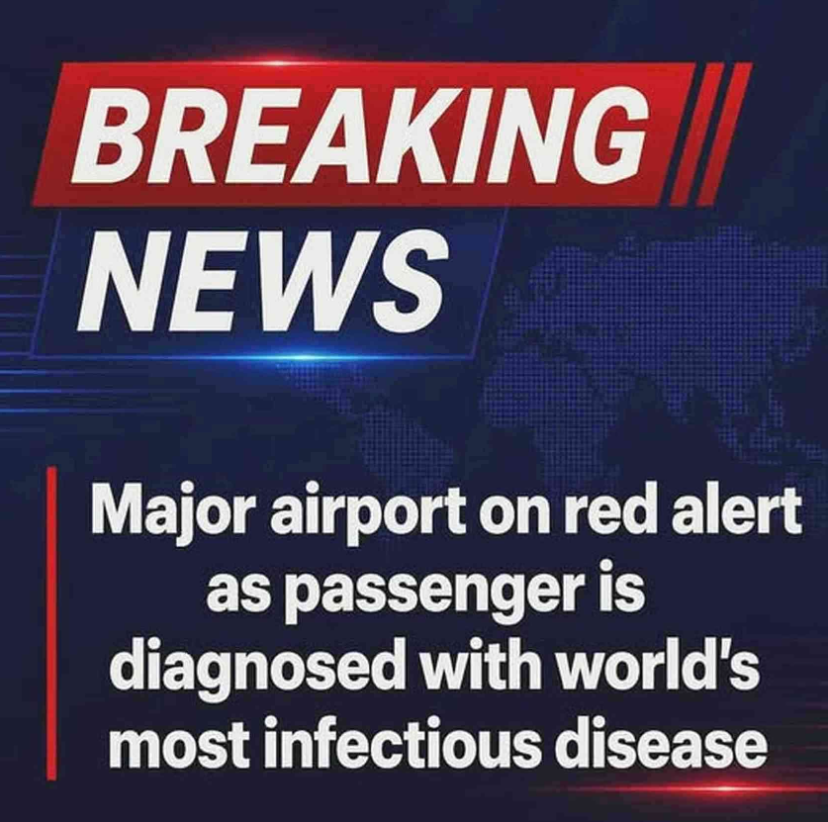
Illinois Health Officials Issue Measles Alert After Exposure at Chicago O’Hare Airport
Illinois public health authorities have issued an advisory after a confirmed measles case was linked to Chicago O’Hare International Airport, raising concerns because of the airport’s heavy passenger traffic and the highly contagious nature of the virus.
According to officials, the infected individual spent a significant amount of time in Terminal 1 on April 22 and April 23, between approximately 10 a.m. and 8 p.m. each day. Health experts warn that measles can spread quickly in crowded indoor settings, making airports particularly challenging locations for contact tracing efforts.
The individual had previously received one dose of the MMR (measles, mumps, and rubella) vaccine. While a single dose offers some protection, health authorities note that the recommended two-dose series provides much stronger immunity. The person later developed symptoms consistent with measles, including fever, cough, and general respiratory illness, followed by the characteristic rash on April 25. Laboratory testing confirmed the infection, and the individual is now isolating at home.
Following confirmation of the case, health departments launched contact tracing efforts to identify travelers, airport workers, and visitors who may have been exposed. Officials acknowledged that tracing contacts in a major transportation hub such as O’Hare is particularly complex due to the large number of people moving through the terminal each day.
A second measles case has since been reported in the same Illinois county. Investigators are still determining whether the two cases are connected or represent separate exposures.
Measles is among the most contagious diseases known and spreads through respiratory droplets. The virus can remain suspended in the air for up to two hours after an infected person leaves an area, allowing transmission even without direct contact.
Health officials are advising anyone who was in Terminal 1 during the exposure period to monitor for symptoms for up to 21 days. Early signs include fever, cough, runny nose, and red eyes, followed by a rash that typically begins on the face and spreads downward. Individuals who suspect exposure should contact a healthcare provider before visiting a medical facility.
Authorities continue to emphasize that vaccination remains the most effective protection against measles, with two doses of the MMR vaccine providing about 97% protection. Officials are urging residents to verify their vaccination status and remain alert as the investigation continues.